
Challenges, Risks, and Smart Ways to Overcome – Monsoon in India
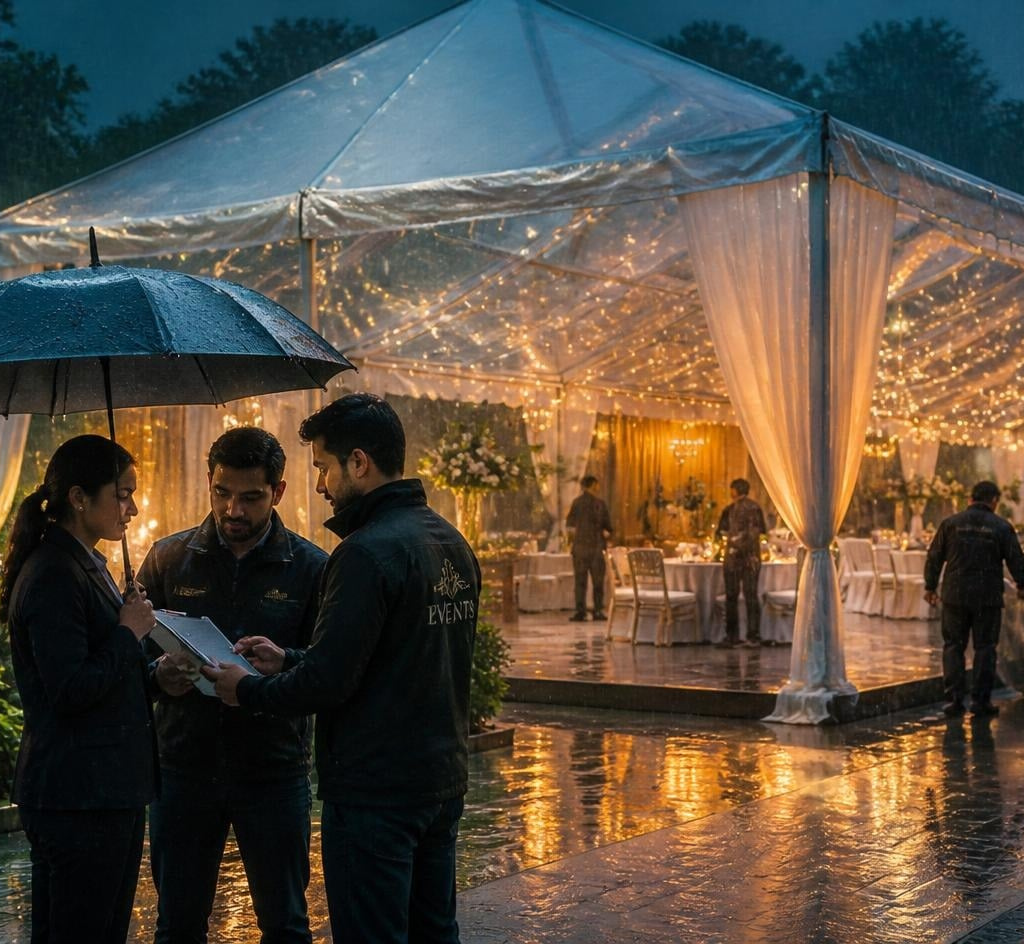
Monsoon season can be a difficult period for the event industry, but it also rewards planners who are prepared, realistic, and operationally strong. The biggest mistake is to treat rain as a minor issue; in reality, it affects venue choice, logistics, guest comfort, technical execution, and budget planning.
Why monsoon is a serious planning factor
In monsoon months, event teams deal with unpredictable showers, traffic delays, wet surfaces, and last-minute operational changes. Outdoor events are especially vulnerable because rain can affect entry flow, seating, staging, power, décor, and guest safety. For clients, the experience can feel chaotic if the team has not planned enough backup options.
Main challenges
Weather uncertainty is the first and biggest problem. Even when forecasts look manageable, monsoon conditions can change quickly and force a change in schedule, layout, or venue. That uncertainty affects everything from artist arrival to food service to audience movement.
Technical and safety issues come next. Moisture, waterlogging, and power fluctuations can impact sound, lighting, screens, and electrical safety if equipment is not properly protected. Wet flooring, slippery ramps, and poor drainage can also create risk for guests and staff.
Guest experience is another major concern. If parking is difficult, access is muddy, or people get wet before even entering the venue, the event immediately feels less premium. In school, corporate, and brand events, that drop in comfort can also reduce turnout and client satisfaction.
What planners should do
The safest solution is to choose a venue with a strong indoor or covered backup space. If the main event is outdoors, the backup location should be close enough to move guests quickly and should already be checked for seating, power, and access.
Weather-proofing the event infrastructure is essential. Use waterproof tents, elevated wiring, anti-skid flooring, and proper rain covers for sensitive equipment. It is also wise to keep a backup power arrangement ready because monsoon can bring sudden outages and voltage issues.
Communication should start early and stay clear. Guests should know what to expect, how to reach the venue, where to park, and what happens if the weather changes. A good event team also uses WhatsApp or SMS updates when there is a venue shift, timing change, or rain-related advisory.
Important cost reality
One important point for the industry is this: do not assume that artists, production teams, or professional vendors will charge less just because it is monsoon. Those days are gone, and good vendors often charge their standard fees regardless of season because their quality, commitment, and operating costs remain the same.
This means planners should never promise clients that monsoon will automatically reduce artist or production cost. While some venue deals may be negotiable in off-season periods, vendor pricing is not something to casually assume or build into a sales promise. A professional planner should sell preparedness and value, not unrealistic discounts.
Advice for newcomers
If you are entering the event industry, monsoon is a strong lesson in risk management. The best planners are not the ones who hope for clear skies; they are the ones who build backup plans before selling the event. Learn to think in layers: venue safety, guest movement, technical protection, and budget honesty.
Also, never overcommit to a client without checking real vendor quotes. In monsoon planning, trust is built when your estimate matches reality and your backup plan works under pressure. That professionalism matters more than making the event sound cheap.
Practical monsoon checklist
- Book venues with indoor or semi-covered fallback options.
- Keep weather-resistant tents, covers, and anti-skid flooring ready.
- Protect sound, lighting, and electrical systems from moisture.
- Plan parking, entry, and guest movement for rain conditions.
- Communicate weather updates and venue changes early.
- Quote costs honestly and never promise automatic vendor discounts.
Final note
Monsoon does not have to reduce event success, but it does demand sharper planning and more honest selling. The planners who adapt well can still create beautiful, safe, and profitable events even in the rain. The key is simple: prepare for the weather, protect the experience, and never make pricing promises you cannot control.
Absolutely — here is a practical Essential Monsoon Event Equipment Protection Checklist for event teams, production houses, and new planners.
BONUS: Essential checklist
1. Power and electrical safety
- Keep all electrical panels, distribution boxes, and switchboards fully covered and elevated above ground level.
- Use waterproof cable joints, sealed connectors, and proper insulation for all outdoor wiring.
- Protect sockets, extensions, and plugs from direct rain and floor moisture.
- Keep surge protectors, MCBs, and proper earthing in place.
- Switch off and disconnect non-essential equipment during heavy rain.
2. Sound and lighting equipment
- Store speakers, mixers, amplifiers, LED processors, and lighting consoles in dry, covered areas.
- Use rain covers for speakers, trusses, moving lights, and control systems.
- Avoid placing equipment directly on wet floors or near water outlets.
- Test all devices before setup so replacement time is minimized if any issue appears.
- Keep spare microphones, cables, batteries, and connectors ready.
3. Stage and truss protection
- Ensure the stage is raised properly to prevent water seepage.
- Use non-slip flooring on stage and backstage movement areas.
- Check truss stability, anchoring, and wind resistance before the event starts.
- Keep side covers or canopies ready for open-air setups.
- Remove water accumulation around stage edges immediately.
4. Generator and backup power
- Place generators on raised, dry, and protected platforms.
- Use weatherproof covers without blocking ventilation.
- Keep fuel, cables, and changeover systems safe from water exposure.
- Test backup power well before guest arrival.
- Maintain enough backup runtime for the full event duration.
5. AV and screen protection
- Protect LED walls, projectors, laptops, and control systems from moisture.
- Keep extra casing, covers, and dry storage for sensitive electronics.
- Avoid direct exposure of screens to rain splash or humidity.
- Use sealed cable paths and avoid open floor wiring where possible.
- Run a full technical check after setup and again just before showtime.
6. Decor and fabric materials
- Use water-resistant décor materials wherever possible.
- Avoid paper-heavy, delicate, or moisture-sensitive décor for outdoor monsoon events.
- Store floral and fabric items in dry transport boxes.
- Protect drapes, backdrops, and soft furnishings from damp conditions.
- Have a quick replacement plan for damaged décor elements.
7. Flooring and guest movement
- Use anti-skid mats, runners, or temporary flooring on all high-traffic paths.
- Keep entry areas dry, clean, and easy to walk through.
- Place mats at entrances to reduce water being carried inside.
- Mark wet zones clearly for staff and guests.
- Keep housekeeping active throughout the event.
8. Storage and transport
- Move all equipment in waterproof crates, cases, and covered vehicles.
- Load and unload only under protected areas whenever possible.
- Keep a dry backstage storage zone for backup items.
- Separate wet, damaged, and working equipment immediately after use.
- Label cables and devices for faster troubleshooting.
9. Emergency readiness
- Keep flashlights, raincoats, umbrellas, towels, and drying cloths on site.
- Assign a rain response team for immediate action.
- Maintain a contact list for electricians, technicians, and backup vendors.
- Keep first-aid and fire safety systems accessible.
- Have a clear rain-delay or shutdown protocol.
What new planners should remember
Monsoon protection is not only about avoiding damage. It is also about protecting guest experience, vendor confidence, and event continuity. A planner who prepares well looks professional even when the weather turns difficult.
Do not wait for rain to start thinking about protection. The real difference between a smooth event and a crisis is how early the team prepares.